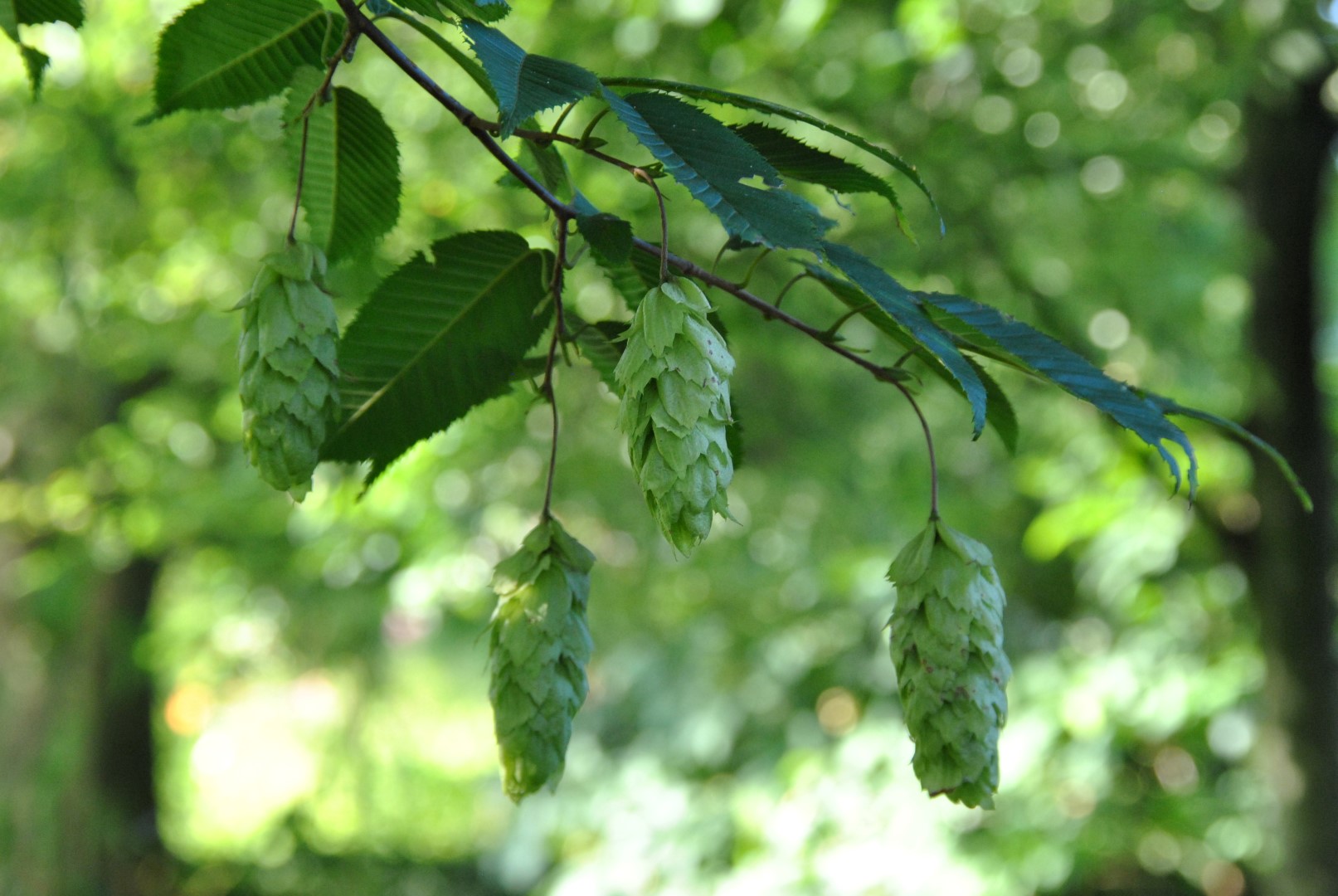
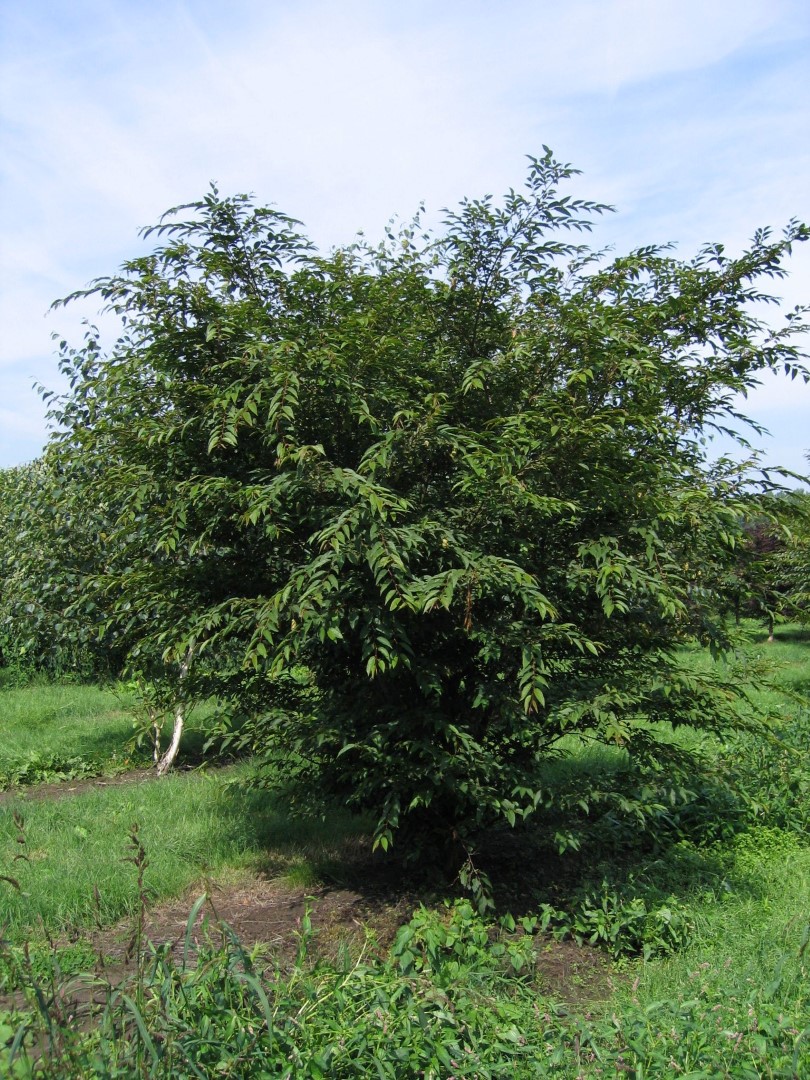
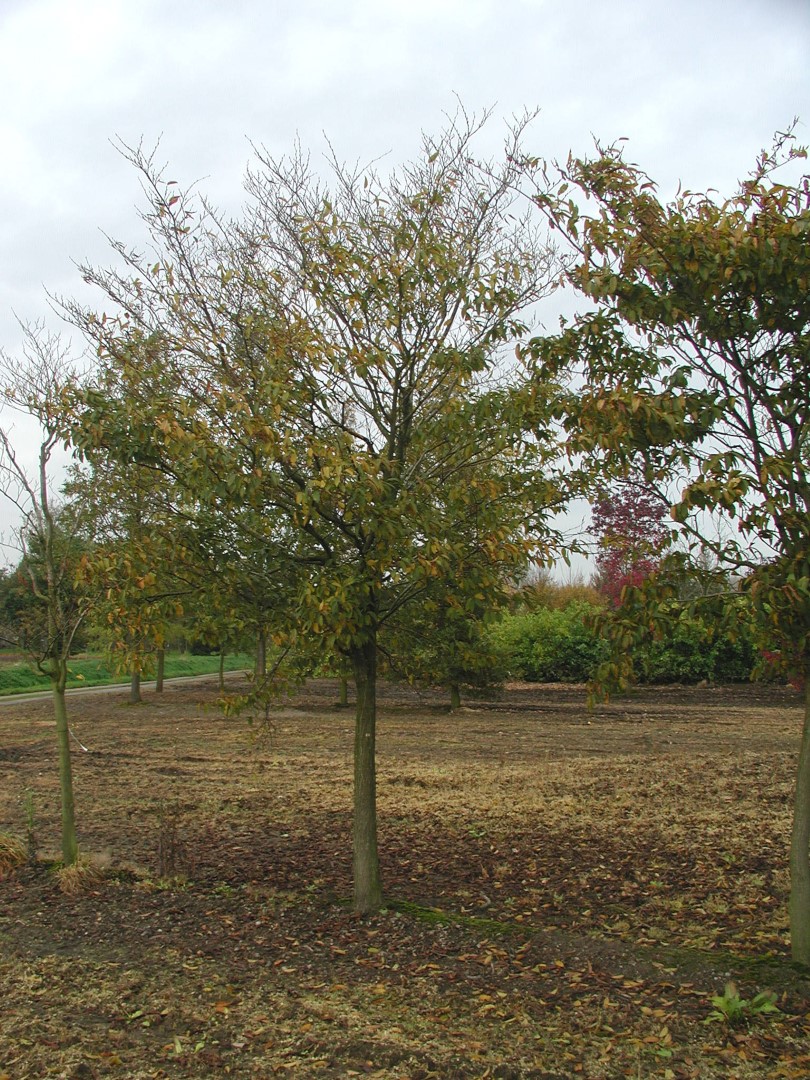
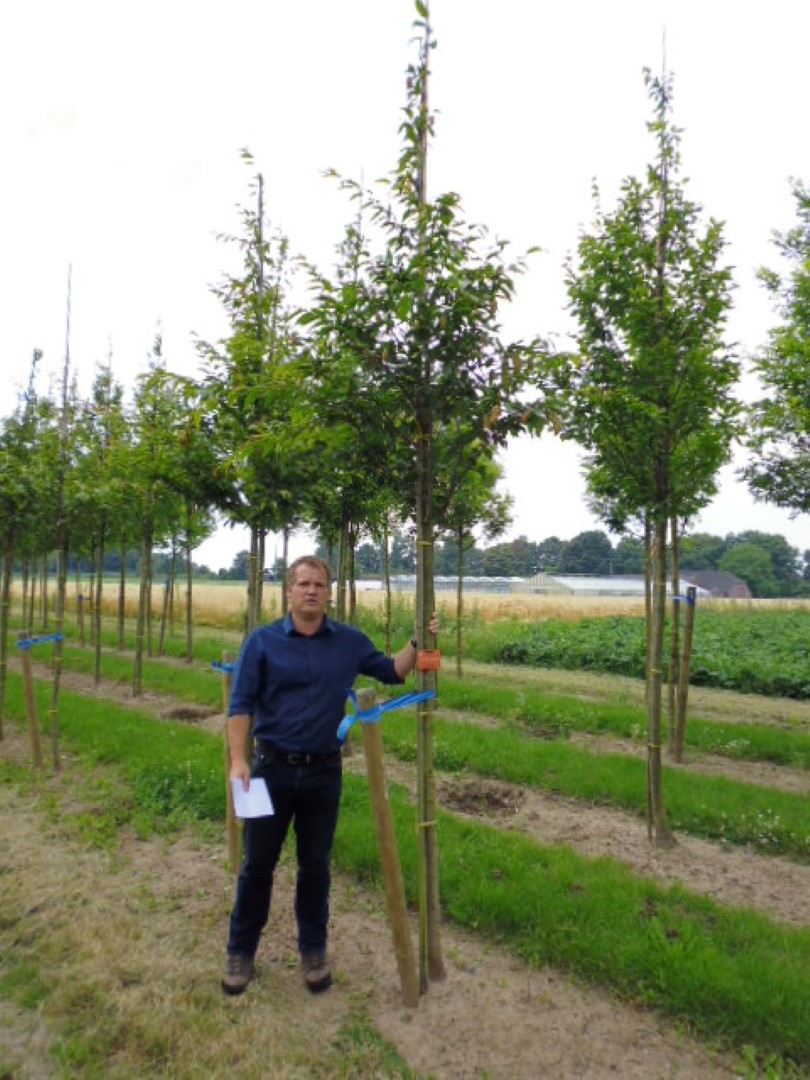
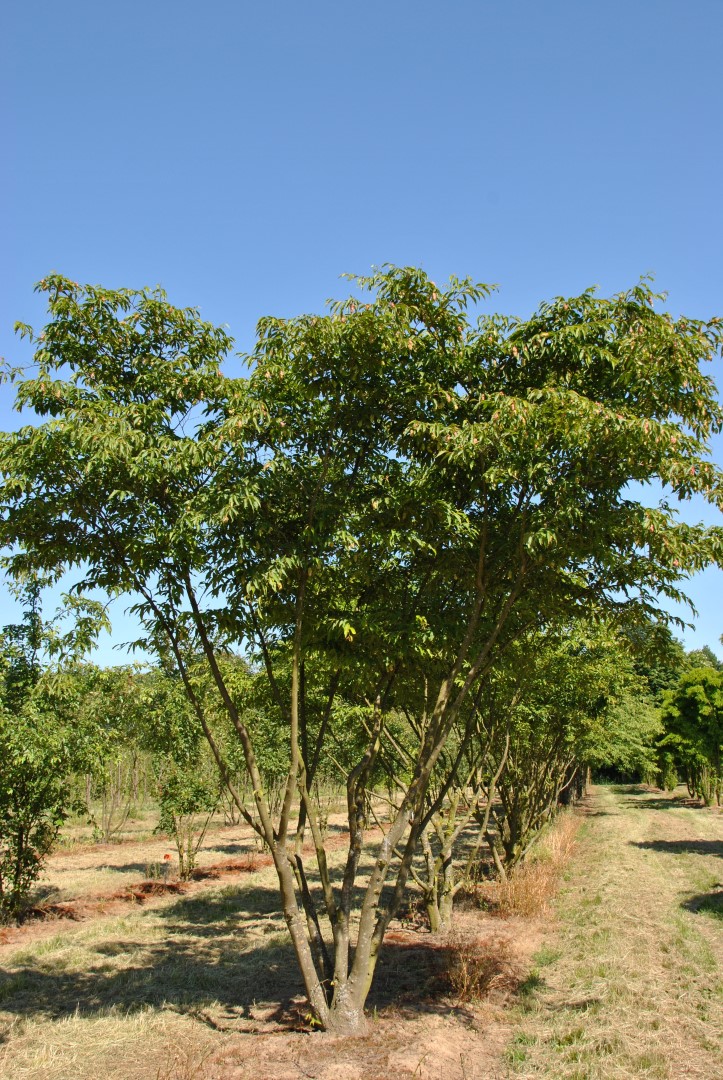
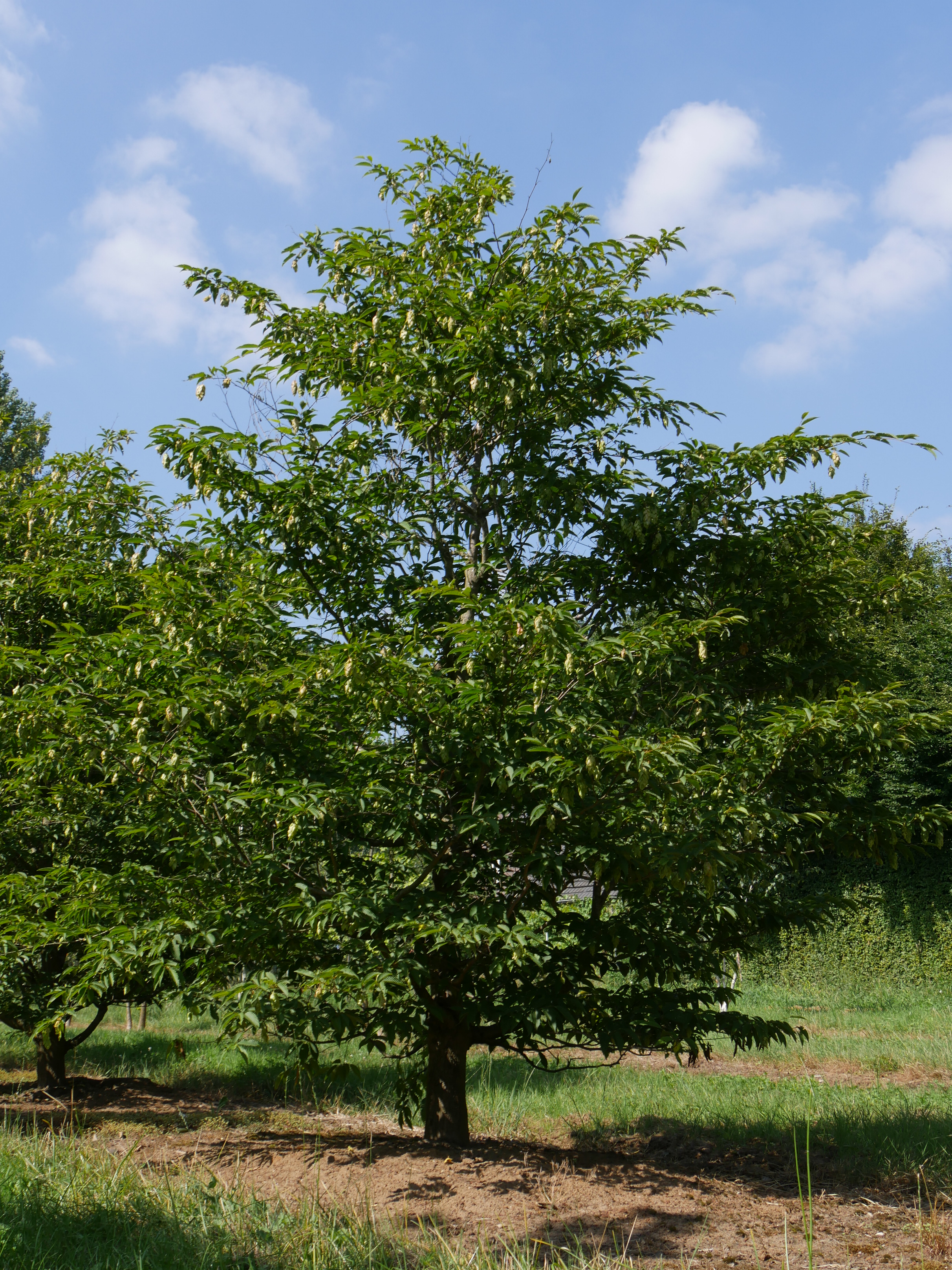
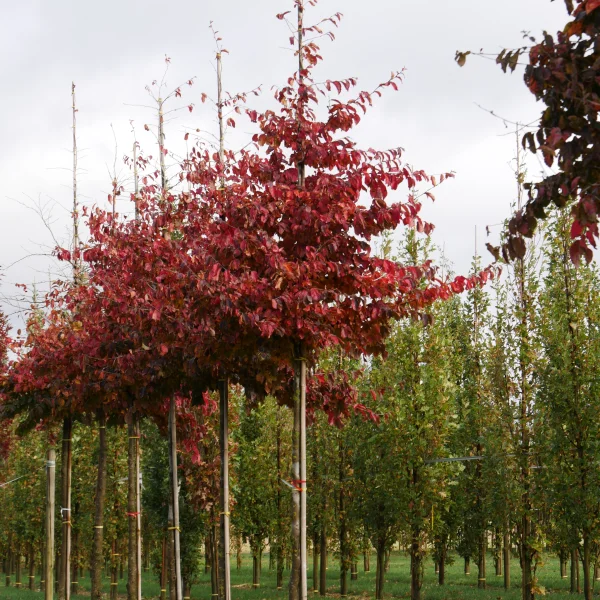
A large bush-like form gives way to a decorative tree with a fine vase-shaped manner of growth that later becomes broader. Its manner of growth resembles that of C. betulus, but there is a clear difference in that the bark of C. japonica is light grey-brown and flakes off in small scales. The leaves are relatively small and tinted reddish when they first appear. The leaf has a sharply double serrated edge and the leaf top tapers to a point. The underside of the leaf is slightly hairy. The nutlets are in short squat clusters. Because there are no separate bracts the clusters look like hops and are thus very decorative. They grow to a length of approx. 6 cm. The autumn colour is golden yellow. Root growth is relatively close to the surface. The rotted leaves are good soil improvers.
vase-shaped, later wider to rounded, half-open crown, capricious growing
Bark and branches
grey, somewhat grooved and scaley
Leaf
narrow ovoid to oval, bright green, 6 - 10 cm
Autumn colour
yellow
Flowers
♂ catkins approx. 4.5 cm, ♀ catkins approx. 1.5 cm, unremarkable,
Fruits
small nutlets between bracts in separate fruit clusters
Spines/thorns
None
Toxicity
usually not toxic to people, (large) pets and livestock
Soil type
loamy
Soil moisture
suitable for dry soil, suitable for wet soil
Paving
tolerates no paving
Winter hardiness zone
7a (-17,7 to -15,0 °C)
Wind resistance
good
Other resistances
can withstand wind
Application
parks, cemeteries, large gardens
Shape
clearstem tree, multi-stem treem
Origin
Japan
Clear stem treeMulti-stem treeclay soilloamy soilsandy soiltolerates no pavingsuitable for dry soilsuitable for wet soilcan withstand windvase-shaped2nd size, between 6 and 12 metreshalf-open crowngreenyellowaverage growingAttractive autumn colournon-toxic (usually)Capricious growingOrnamental fruit
Carpinus japonica can eventually reach a height of 8 - 15 m, depending on the site and climate conditions.
Carpinus japonica is average growing and can eventually reach a height of 8 - 15 m, depending on the site and climate conditions.
The leaves of Carpinus japonica turn yellow in autumn.
The right time to plant Carpinus japonica is during the dormancy period. In Western Europe, Carpinus japonica with root balls can generally be planted from mid-November to late April, although this depends strongly on the climatic conditions and the species of tree.